





Guidelines to the Public for Low Carbon Actions
As the first national comprehensive sports event jointly hosted by Guangdong, Hong Kong, and Macao, the 15th National Games of the People’s Republic of China, the 12th National Games for Persons with Disabilities and the 9th National Special Olympic Games (15th NG, 12th NGD and 9th NSOG) (Hong Kong) actively embrace the principle of "green, shared, open, and clean" .
To enhance public awareness and engagement with the concept of a "Green National Games, the National Games Coordination Office (Hong Kong) (NGCO) has formulated a "Guidelines to the Public for Low Carbon Actions" to showcase the low-carbon achievements in Hong Kong, promote green concepts, and encourage the public to actively practice low-carbon lifestyle. Please join us in supporting 15th NG, 12th NGD and 9th NSOG in achieving carbon neutrality!
Low-Carbon Achievements in Hong Kong
During the preparations for the 15th NG, 12th NGD and 9th NSOG in Hong Kong, NGCO developed a "Green National Games" Work Plan and actively implemented various low-carbon initiatives. The following part will introduce the advanced energy-saving measures used at the venues in Hong Kong, the waste separation measures implemented during the Games, and low-carbon travel recommendations for the public.
Kai Tak Sports Park (KTSP)
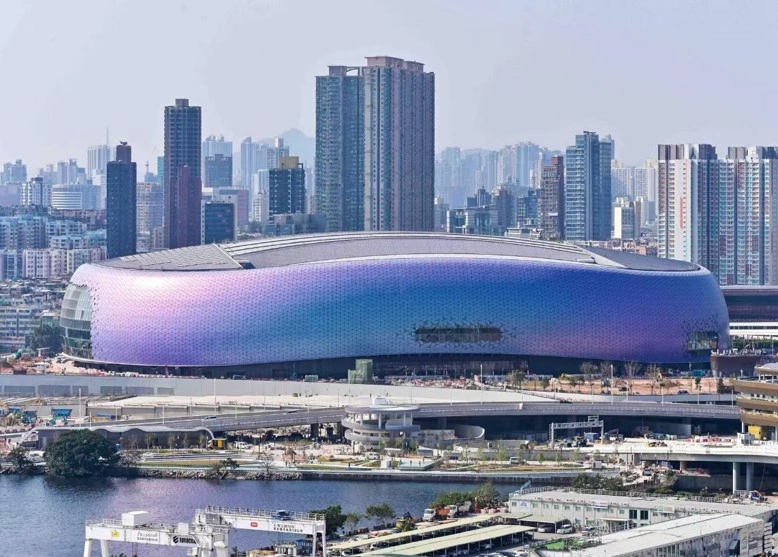
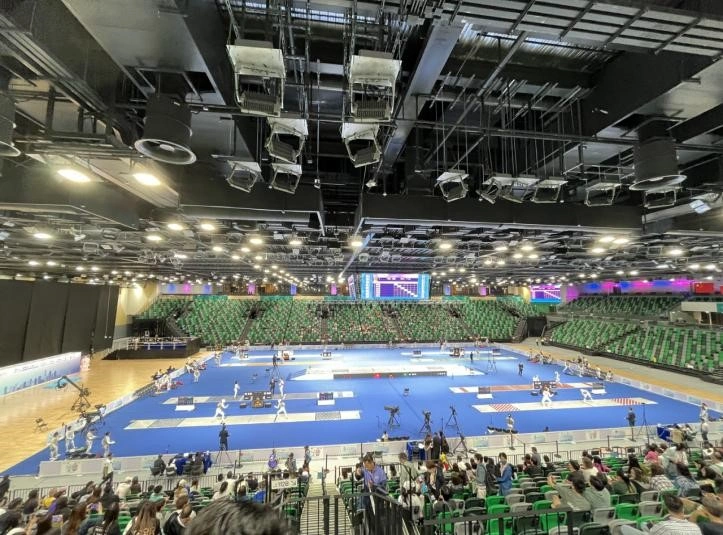
As Hong Kong’s largest integrated sports and entertainment complex, KTSP has, since its opening in March 2025, hosted numerous large-scale sporting and cultural events, embedding sustainability principles throughout its design, construction and operations. The venue boasts a greening ratio of over 30%, with more than 1,000 trees and 14 hectares of outdoor space, helping to mitigate the urban heat-island effect. Rooftop solar panels supply hot water and electricity, while a rainwater harvesting system meets roughly 25% of irrigation needs.
Hong Kong Coliseum
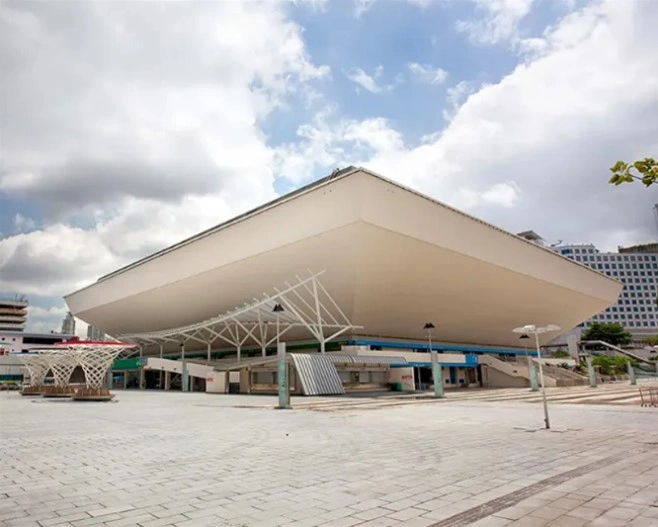
Hong Kong Coliseum has also made innovative strides in low-carbon operations. Hosting the men’s U22 basketball tournament during the Games, it has applied a “electricity-free cooling” coating developed by the City University of Hong Kong, covering about 9,700 m² of rooftop and roof wall surfaces. This coating can reduce indoor temperature of buildings without consuming electricity, reducing electricity consumption for air-conditioning.
Other Competition Venues
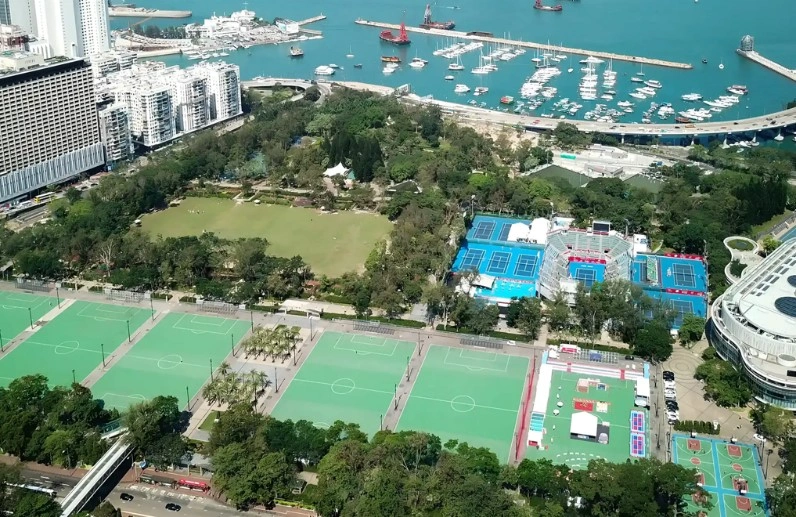
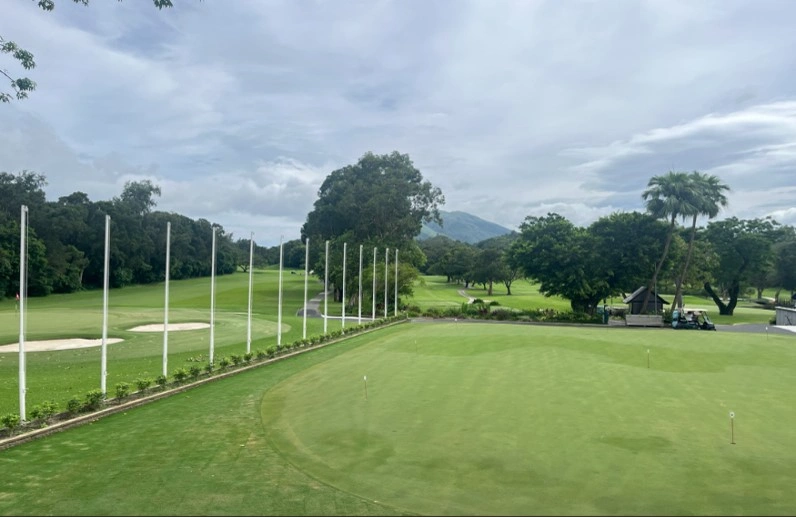
Other competition venues have adopted site-specific low-carbon measures. For example, Victoria Park has leveraged existing facilities to avoid new-build emissions and installed waste separation and recycling facilities; Hong Kong Velodrome uses natural lighting to reduce energy for illumination, while its surrounding park offers extensive greenery to enhance urban ecology; Tsuen Wan Sports Centre and Ma On Shan Sports Centre have installed energy-efficient lighting and air-conditioning systems and provide waste separation and recycling facilities, in line with the “Green National Games” Work Plan; During golf event, hydrogen fuel cell genset was used to supply electricity to support facilities outside the competition area, such as security checkpoints, container offices at backup area, and tents for staff, etc.
Waste Separation
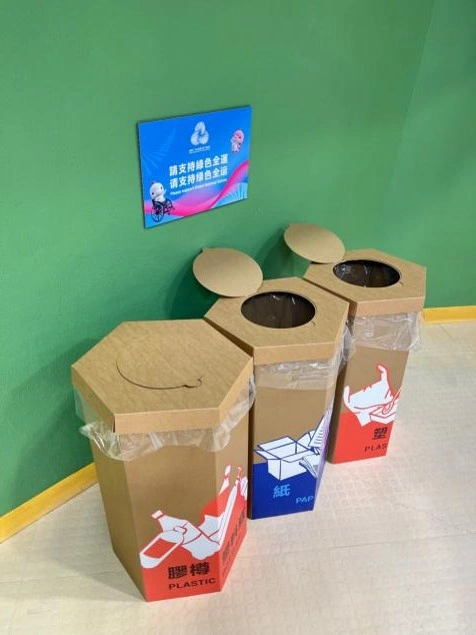
Waste separation is a key component of the low-carbon initiatives in Hong Kong. Paper trash cans will be widely distributed throughout the competition venues during the tournament. Made from recyclable and biodegradable paper, these bins significantly reduce carbon emissions during production and the environmental impact of raw material extraction compared to traditional plastic or metal bins. Each bin is clearly labeled with "Paper", "Plastic Bottles", and "Other Plastics". Spectators are encouraged to place their waste in the corresponding bins according to the signages.
Low-Carbon Commuting Recommendations
15th NG, 12th NGD and 9th NSOG (Hong Kong) is implementing the “Green National Games” Work Plan, driving decarbonisation through pillars such as expansion of new-energy transport coverage and carbon footprint management, including the implementation of “Green Travel” objectives. Data shows that the people who choose to travel 5 kilometers by public transportation can save over 1 kilogram of carbon emissions per person compared to driving the same distance by private car. The use of mass transit can significantly reduce the carbon footprint of transportation and alleviate traffic congestion around venues during the Games, achieving a win-win situation for both environmental protection and convenience. Spectators attending 15th NG, 12th NGD and 9th NSOG (Hong Kong) are advised to use public transportation to travel to the venues whenever possible.

Golf Event Shuttle Bus Services
During the golf event from 13-16 November, we will provide point-to-point shuttle bus services to and from the Fanling Golf Course at (1) Sheung Shui MTR Station, (2) Hung Hom MTR Station, (3) Kowloon Tong MTR Station, and (4) Hong Kong Station. Details are as follows:
Shuttle Bus Service Timetable to/from Hong Kong Golf Club, Fanling Golf Course
(1) Sheung Shui MTR, Exit C
| 13 - 14/11/2025 | 15 - 16/11/2025 | ||||||
| Sheung Shui MTR, Exit C | Fanling Golf Course | Sheung Shui MTR, Exit C | Fanling Golf Course | ||||
| 7:00 | 12:40 | 09:00 | 14:40 | 7:00 | 11:15 | 09:00 | 13:15 |
| 7:20 | 13:00 | 09:20 | 15:00 | 7:15 | 11:30 | 09:15 | 13:30 |
| 7:40 | 09:40 | 15:20 | 7:30 | 11:45 | 09:30 | 13:45 | |
| 8:00 | 10:00 | 15:40 | 7:45 | 12:00 | 09:45 | 14:00 | |
| 8:20 | 10:20 | 16:00 | 8:00 | 12:15 | 10:00 | 14:15 | |
| 8:40 | 10:40 | 16:20 | 8:15 | 12:30 | 10:15 | 14:30 | |
| 9:00 | 11:00 | 16:40 | 8:30 | 12:45 | 10:30 | 14:45 | |
| 9:20 | 11:20 | 17:00 | 8:45 | 13:00 | 10:45 | 15:00 | |
| 9:40 | 11:40 | 9:00 | 11:00 | 15:15 | |||
| 10:00 | 12:00 | 9:15 | 11:15 | 15:30 | |||
| 10:20 | 12:20 | 9:30 | 11:30 | 15:45 | |||
| 10:40 | 12:40 | 9:45 | 11:45 | 16:00 | |||
| 11:00 | 13:00 | 10:00 | 12:00 | 16:15 | |||
| 11:20 | 13:20 | 10:15 | 12:15 | 16:30 | |||
| 11:40 | 13:40 | 10:30 | 12:30 | 16:45 | |||
| 12:00 | 14:00 | 10:45 | 12:45 | 17:00 | |||
| 12:20 | 14:20 | 11:00 | 13:00 | ||||
Pick-up and Drop-off point: Sheung Shui MTR, Exit C
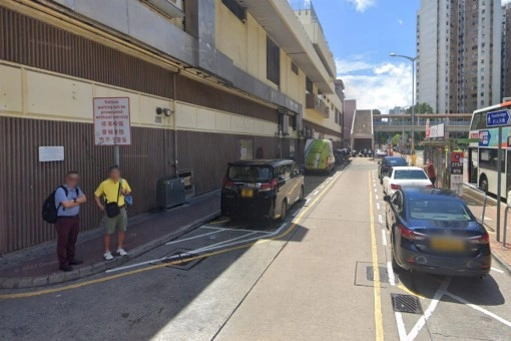
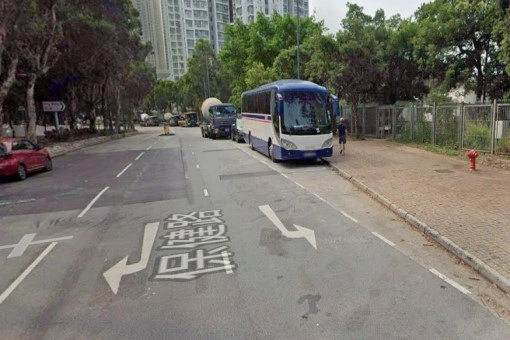
Pick-up and Drop-off point: Hong Kong Golf Club – Fanling courses (Po Kin Road)
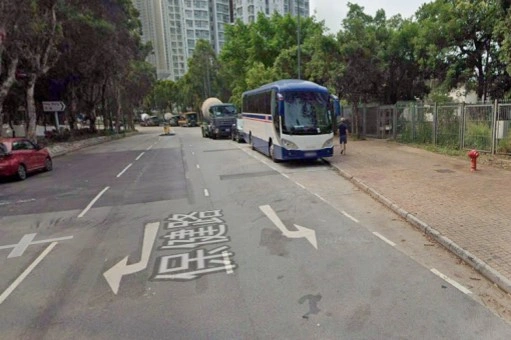
(2) Hung Hom MTR, Exit C2
| 13 - 14/11/2025 | 15 - 16/11/2025 | 13 - 14/11/2025 | 15 - 16/11/2025 |
| Hung Hom MTR, Exit C2 | Fanling Golf Course | Hung Hom MTR, Exit C2 | Fanling Golf Course |
| 7:00 | 15:00 | 07:00 | 15:00 |
| 8:00 | 15:30 | 07:30 | 15:30 |
| 9:00 | 16:00 | 08:00 | 16:00 |
| 10:00 | 16:30 | 08:30 | 16:30 |
| 11:00 | 17:00 | 9:00 | 17:00 |
| 9:30 | |||
| 10:00 | |||
| 10:30 | |||
| 11:00 | |||
| 11:30 |
Pick-up and Drop-off point: Hung Hom MTR, Exit C2
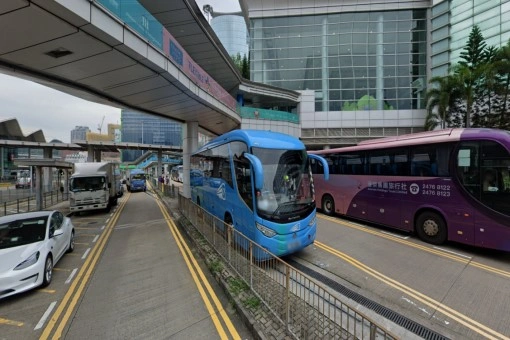
Pick-up and Drop-off point: Hong Kong Golf Club – Fanling courses (Po Kin Road)
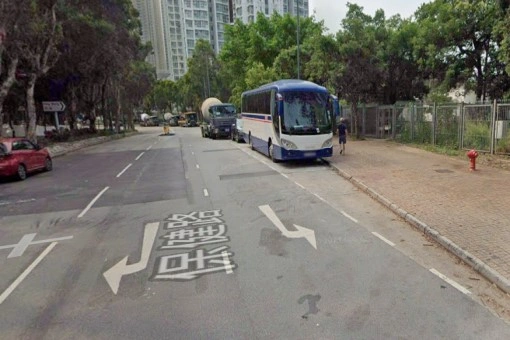
(3) Kowloon Tong MTR, Exit D
| 13-14/11/2025 | 15-16/11/2025 | ||
| Kowloon Tong MTR, Exit D | Fanling Golf Course | Kowloon Tong MTR, Exit D | Fanling Golf Course |
| 7:00 | 15:15 | 7:00 | 15:10 |
| 8:00 | 15:45 | 7:30 | 15:40 |
| 9:00 | 16:15 | 8:00 | 16:10 |
| 10:00 | 16:45 | 8:30 | 16:40 |
| 11:00 | 17:15 | 9:00 | 17:10 |
| 9:30 | |||
| 10:00 | |||
| 10:30 | |||
| 11:00 | |||
| 11:30 | |||
Pick-up and Drop-off point: Kowloon Tong MTR, Exit D

Pick-up and Drop-off point: Hong Kong Golf Club – Fanling courses (Po Kin Road)
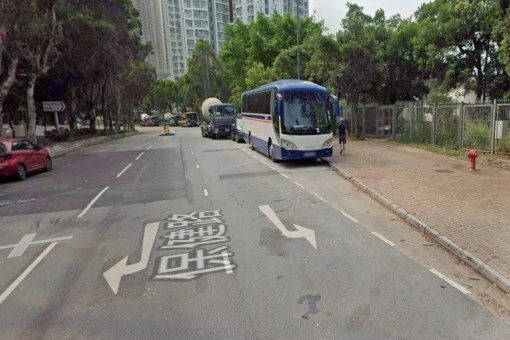
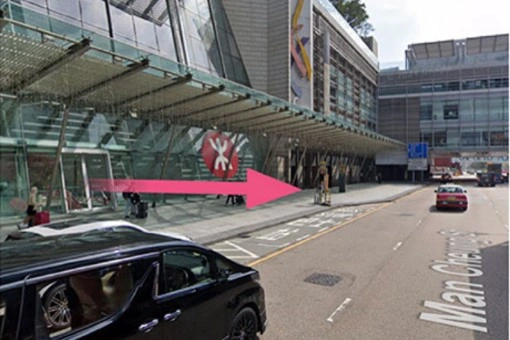
(4) Hong Kong Station, Exit F (Central IFC Mall, Man Cheung Street)
| 13-14/11/2025 | 15-16/11/2025 | ||
| Hong Kong Station Exit F | Fanling Golf Course | Hong Kong Station Exit F | Fanling Golf Course |
| 7:00 | 15:15 | 7:00 | 15:10 |
| 8:00 | 15:45 | 7:30 | 15:40 |
| 9:00 | 16:15 | 8:00 | 16:10 |
| 10:00 | 16:45 | 8:30 | 16:40 |
| 11:00 | 17:15 | 9:00 | 17:10 |
| 9:30 | |||
| 10:00 | |||
| 10:30 | |||
| 11:00 | |||
| 11:30 | |||
Pick-up and Drop-off point: IFC Mall, Man Cheung Street, Exit F
Pick-up and Drop-off point: Hong Kong Golf Club – Fanling courses (Po Kin Road)
Know more about carbon neutrality
NGCO is promoting carbon neutrality for 15th NG, 12th NGD and 9th NSOG (Hong Kong). The following Q&A will hopefully provide you with a deeper understanding of the concept of carbon neutrality.
Question 1: What is carbon neutrality?
Answer:Carbon neutrality means that through the "emission reduction + offset" method, the greenhouse gas emissions generated by specific entities (such as individuals, events, cities) within a certain period (such as one year, one event cycle) are balanced with the emissions eliminated through afforestation, purchasing carbon credits, developing renewable energy projects, etc., and ultimately achieving net zero carbon emissions. It does not mean that no carbon emissions are generated at all, but that "emissions are equivalent to offsets."
Question 2: What are carbon emissions?
Answer:"Carbon emissions" refers to the process by which human activities (such as burning of fossil fuels, industrial production, transportation, etc.) release greenhouse gases such as carbon dioxide (CO₂), methane (CH₄), and nitrous oxide (N₂O) into the atmosphere. Carbon dioxide is the most important type of emission. "Tons of carbon dioxide equivalent (tCO₂e)" is usually used as a unified unit of measurement to measure the combined impact of different greenhouse gases on climate warming.
Question 3: What is a carbon footprint?
Answer:"Carbon footprint" refers to the total greenhouse gas emissions directly or indirectly generated by an individual, organization, product or activity throughout its entire life cycle (from raw material acquisition, production, transportation to use and disposal). It includes both the "personal carbon footprint" generated by daily travel, diet, consumption and other behaviours, as well as the "activity carbon footprint" generated by event venue construction, event operations, etc.
Question 4: What is carbon credit?
Answer:Carbon credits, also known as carbon allowances or carbon offsets, are tradable certificates representing a certain amount of greenhouse gas emissions reduction (typically 1 tonne of CO₂e). Companies or organizations can purchase carbon credits to offset their own carbon emissions, which are difficult to reduce. Common sources of carbon credits include renewable energy projects (such as wind power and photovoltaics) and forestry carbon sink projects. 15th NG, 12th NGD and 9th NSOG (Hong Kong) will also accept donations of carbon credits from various sectors that meet the requirements of the "15th NG, 12th NGD and 9th NSOG (Hong Kong) Carbon Neutrality Implementation Plan" to offset a portion of the event's carbon emissions.
Question 5: What are fossil energy and renewable energy?
Answer: "Fossil energy" refers to energy sources formed over vast geological timescales from the remains of ancient fossils, such as coal, oil, and natural gas. These release large amounts of carbon dioxide when burned and are a major source of carbon emissions. "Renewable energy" refers to energy sources that are recyclable and produce virtually no carbon emissions, such as solar energy, wind energy, hydropower, and hydrogen energy.
Question 6: What is Life Cycle Assessment (LCA)?
Answer: LCA is a method for evaluating the environmental impact of a product, activity, or service throughout its entire life cycle (from raw material extraction, production, transportation, use, to disposal). This method comprehensively calculates the carbon emissions of each process. For example, physical paper tickets for the Natioanl Games events in Hong Kong are significantly replaced by e-tickets,and the carbon emissions of e-tickets over their entire life cycle, encompassing paper production, printing, transportation, and disposal, are significantly lower than those of physical paper tickets.
Carbon Neutrality Implementation for 5th NG, 12th NGD and 9th NSOG (Hong Kong)
To ensure the successful achievement of carbon neutrality goals for 15th NG, 12th NGD and 9th NSOG (Hong Kong), NGCO has engaged China Inspection Company Limited to establish a carbon neutrality framework and coordination mechanism, measure and account for carbon emissions, promote public participation in green initiatives, and implement carbon offsets and certification.
The Carbon Neutrality Task Force has completed carbon emissions data from test events and key departments,and will focus on accounting for carbon emissions during the events, covering venue energy consumption, transportation, material transportation, catering and accommodation, and waste disposal. These accounting processes will be fully aligned with internationally recognised standards, including the GHG Protocol, ISO 14064, and PAS 2060, and will be integrated with the carbon neutrality guidelines for sports events to ensure a scientific, transparent, and comparable accounting process.
Carbon Credit Donation for 15th NG, 12th NGD and 9th NSOG (Hong Kong)
15th NG, 12th NGD and 9th NSOG mark the first time that Hong Kong has achieved carbon neutrality at a major sporting event. NGCO urges the public to fully support the low-carbon initiatives of the National Games and welcomes voluntary carbon credit donations from local businesses and organisations to support the Games' carbon neutrality goals.